

The Courses of a Meal, From Soup to Dessert
By Habun · Oct 07, 2026 · Category: Food & Flavors
A lentil soup cooked with apples, curry powder, and Asian spices says a lot about how a meal is meant to unfold. It arrives warm, brightened with lemon, and nowhere near filling enough to be the whole plan. That is the point. Understanding the courses of a meal helps you order with confidence, pace a long table, and save room for the dish you actually came for. Here is the sequence, one stage at a time.
How Is a Multi-Course Meal Built?
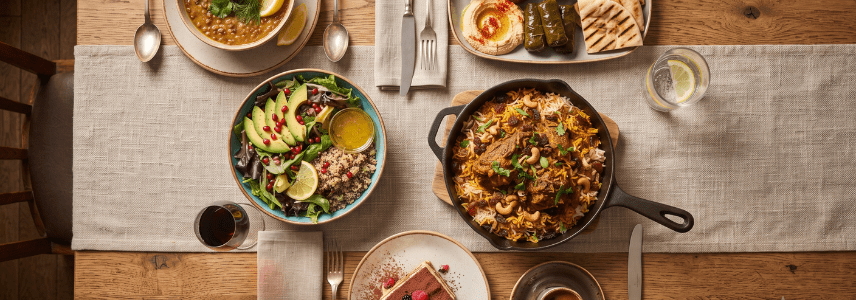
A multi-course meal is a run of separate dishes served one after another instead of one large plate. Smaller portions give the kitchen control over timing, and they let you taste more without stalling after the second dish. The usual courses of a meal on a Western-style menu are appetizer, soup, salad, main course, and dessert, with coffee or tea closing things out.
Not every table follows that order. Some skip the salad; others bring soup first. Some restaurant menus also list categories in a different order from the one they are served in, so read the headings as a map, not a schedule.
Appetizers and Soup Open the Table
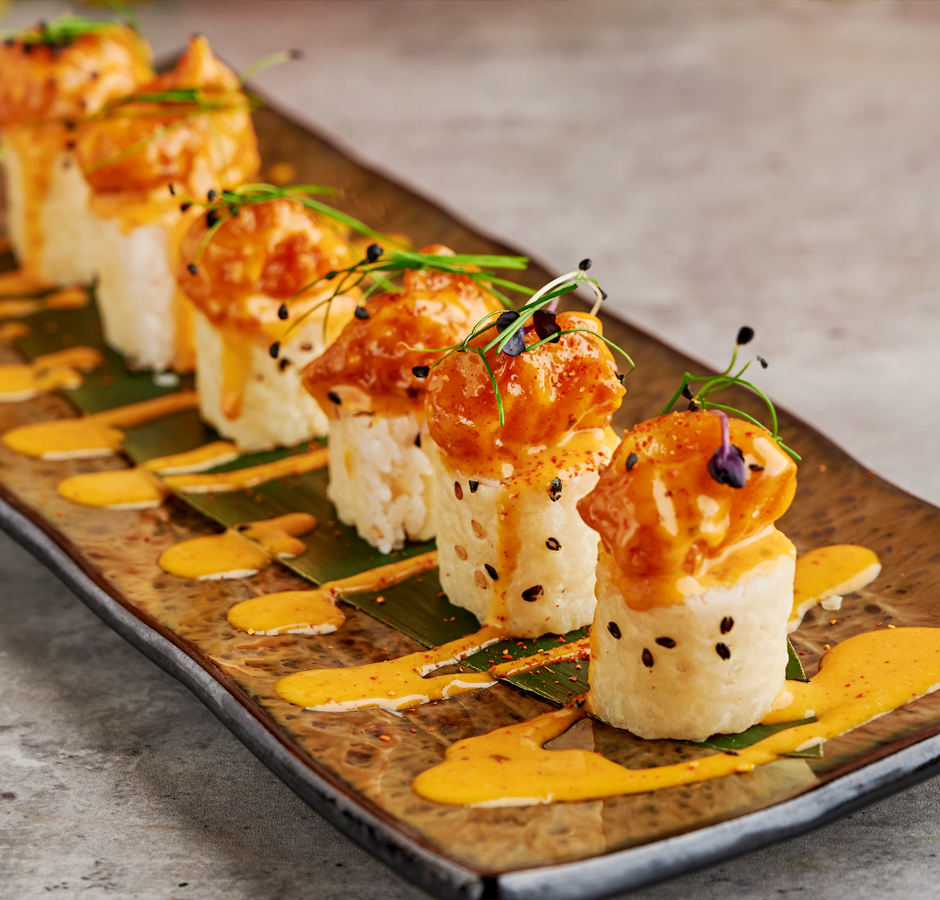
Appetizers wake up conversation and appetite without ending hunger. Think bao platters, crispy shrimp, or chicken wings, all small enough to pass around.
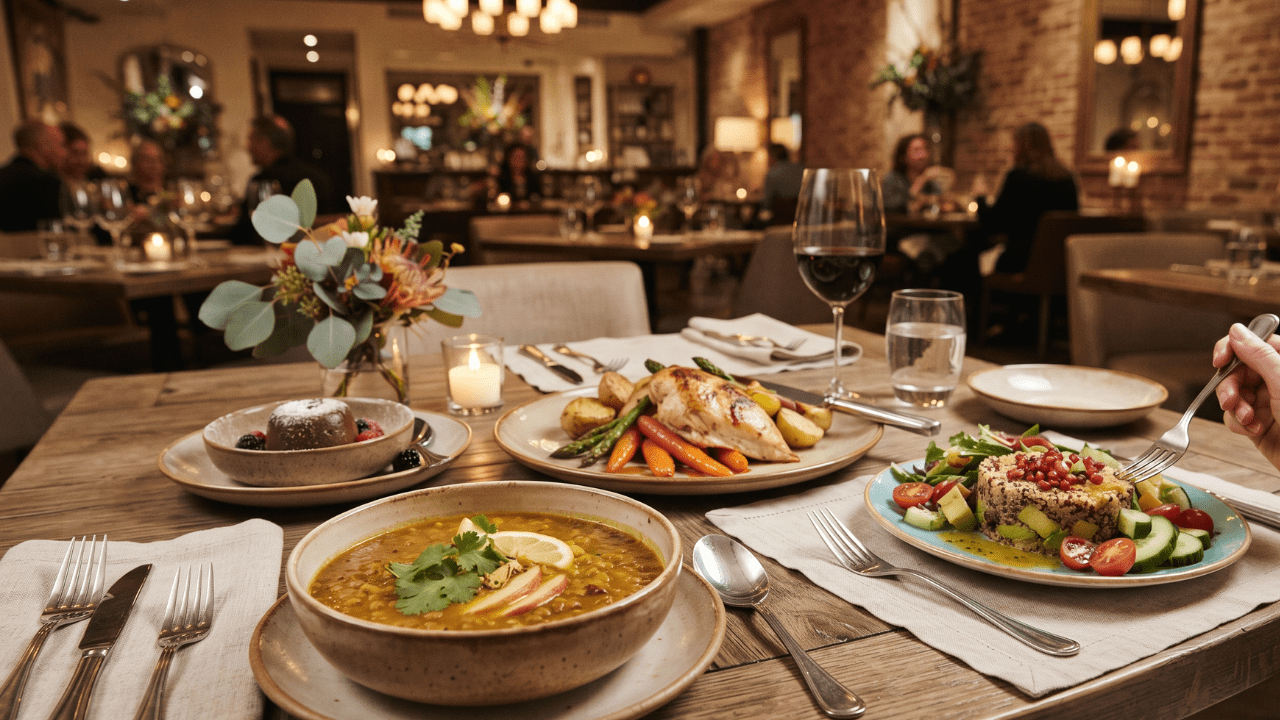
Soup follows, or sometimes leads. It slows the pace and sets a warm tone. A creamy chicken soup in a bread bowl with garlic croutons reads as hearty, while a lentil version with lemon and coriander leaves feels lighter. One bowl is usually plenty before heavier plates.
The Salad Course Resets the Palate
Acid and crunch do real work here. A salad cuts through the richness of earlier dishes and gets you ready for the main. A layered quinoa salad with avocado, pomegranate seeds, and citrus vinaigrette does that job well, and so does a crisp Caesar, a crab salad, or a Mexican corn salad.
Texture matters as much as flavor. A crunchy bite after a creamy soup makes the next dish land better.
Main Course and Dessert Carry the Weight
The main course is the anchor, usually the largest and most filling dish. Pasta in a creamy sauce, roast chicken, risotto, or a slow-cooked biryani all sit here. Keep the earlier courses small, and the anchor gets the attention it deserves.
Dessert closes the sequence. A tiramisu, a rich mud pudding, or a mango dessert in summer all fit the role. Coffee comes after, Turkish or Arabic, and gives the table a reason to linger.
How the Courses of a Meal Change at a Shared Table
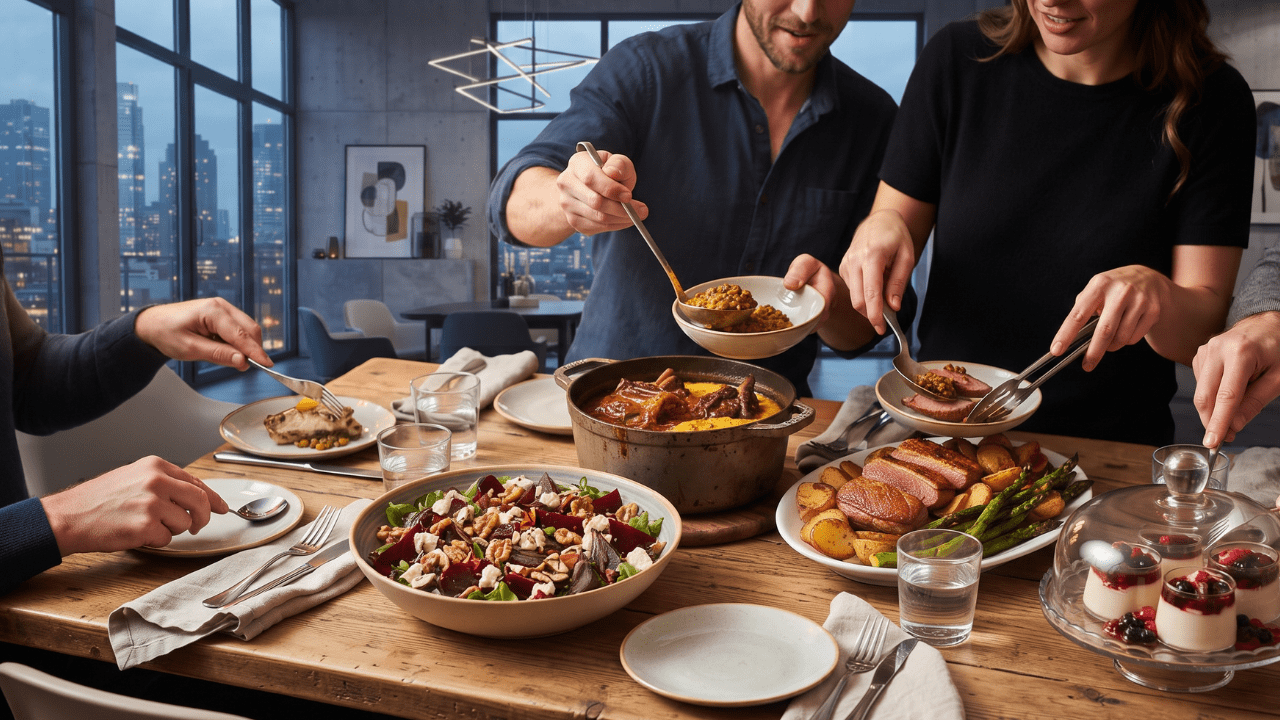
Group dining bends the rules. Instead of one plate per person per stage, a gathering menu lists dishes meant to be passed around, sorted into soups, salads, appetizers, main course, and desserts. Order in rounds, not all at once. Start with soup and a couple of starters, see how everyone is doing, then add mains. Food stays hot and the table stays clear.
Allergies and dietary needs deserve a direct question to the staff, because a menu line rarely lists every ingredient. For medical diets, a doctor or registered dietitian is a better guide than any menu.
Final Thoughts
Courses exist to give a meal shape. Light dishes first, heavier ones later, something sweet at the end and room in between to talk. Once you see that pattern, any menu gets easier to read. The gathering menu at Habun in Sharjah and Ras Al Khaimah follows the same flow, from soups to desserts. Which course would you build your next shared meal around?